
The Tower Theatre Story
The Tower Theatre, an iconic venue in Folkestone, holds a unique story, transitioning from a wartime garrison church to a thriving cultural hub. Its journey reflects resilience, community spirit, and a deep respect for heritage.
From Garrison Church to Cultural Home

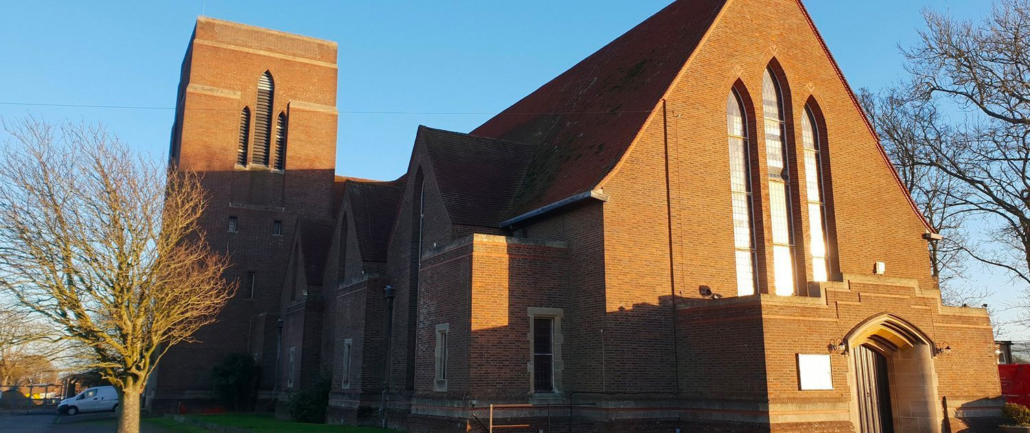
There is something quietly miraculous about the square brick tower that has stood above the hills of Shorncliffe since 1941. It has survived a bombing raid, outlasted an army, and found — against all odds — a second life ringing with music, laughter, and applause. But we’re getting ahead of ourselves. Every great story deserves to begin at the beginning.
A Church Built for Defiance
In the dark days of 1941, with Europe under the shadow of war and the Kent coast peering across the Channel at Nazi-occupied France, someone decided the time was exactly right to build a church. Not a modest, keep-your-head-down sort of chapel — but a proper, tall, unmistakable garrison church: the Church of St Mark, rising boldly from a hilltop at Shorncliffe, its gothic sandstone windows and reinforced concrete arches visible for miles in every direction.
It was a remarkable thing to attempt. Bricks were scarce. Skilled labour was stretched to breaking point. Rumour even has it that foreign prisoner labour helped raise those sturdy walls. Yet up it went — and the enemy noticed. Nazi propagandist Lord Haw-Haw singled out the newly built church as a target. A bombing attempt followed. It failed. When Archbishop Fisher arrived to perform the Service of Dedication, he came escorted by Spitfires — a detail so extraordinary it sounds invented, and yet there it is. This was a building that the whole country, it seemed, had a stake in.
St Mark’s was never simply a place of worship. It was a declaration. A message, set in brick and stone on a windswept hilltop, that ordinary life — faith, community, beauty — would carry on regardless.
A Quiet Farewell
For decades, St Mark’s was exactly that: a spiritual home for the soldiers of Shorncliffe Garrison. But armies change, and so do times. As the garrison shrank to a single battalion of Gurkhas, the congregation thinned with it. By 1998, the Ministry of Defence had made its decision: the church would be sold.
On Remembrance Day — 11th November 1998 — the final service was held. It is hard to imagine a more poignant date for a farewell. The stained glass windows were carefully removed, the banners taken down, the organ carried out into the November air. The doors closed. The building fell silent.
It could so easily have been the end of the story.
FHODS Finds a Home
For the Folkestone-Hythe Operatic and Dramatic Society — FHODS to its friends — it was the beginning of one. Founded in the early twentieth century and long based at the much-loved Little Theatre in Sandgate, the society had grown. Their productions had grown. And quietly, persistently, so had the dream of a bigger, permanent home where their ambitions could properly take the stage.
When St Mark’s came onto the market, FHODS members saw what others might have missed: not a redundant building, but an extraordinary opportunity. Here was a space with history in its walls, character in its arches, and — crucially — a future.
In 2001, FHODS purchased the church and renamed it The Tower Theatre. What followed were years of fundraising, of weekends given over to volunteering, of problems solved through sheer collective determination. The gothic arches stayed. The tower stayed. The soul of the building stayed. What changed was everything inside: a proper stage, a proper auditorium, the full infrastructure of a theatre built to last.
The Curtain Rises
In 2007, the curtain rose for the very first time on The Tower Theatre’s stage. The production was Oliver! — a show about orphans, found families, and the stubborn belief that things can be better than they are. If that feels like a fitting choice, it almost certainly was. A decade later, in 2017, FHODS returned to the same beloved show to mark ten years of performances in their remarkable home. Some stories are worth telling twice.
A Beacon for the Arts
Today, The Tower Theatre is something genuinely rare: one of the very few amateur theatre societies in the UK to own its own venue outright. It is a home for bold, ambitious productions; for community events and youth programmes; for audiences who travel from Folkestone, Hythe, and well beyond to see what this remarkable place will do next.
From a hilltop church built in the teeth of a world war — a symbol of defiance visible from enemy shores — to a thriving, community-run arts venue full of light and life and music: the tower still stands. And the story, thankfully, keeps growing.